
How to Stop Foreclosure in Indiana (Options by Stage)
Foreclosure can often be stopped, but not every option works at every stage.
What you can do depends on:
- where you are in the process
- how much time is left
- what you can realistically complete
This page shows what actually works based on those factors, so you can focus on what still applies to you.

How to Stop Foreclosure in Indiana
(What Actually Works)
There are a few ways foreclosure is typically stopped:
- bringing the loan current
- working with the lender
- selling the property
Each can work, but only under certain conditions.
Some require time.
Some require income.
Some require fast action.
The key is knowing which option still works based on where you are right now.
Can Foreclosure Still Be Stopped in Your Situation?
In many cases, yes but it depends on:
- your stage in the process
- how much time is left
- whether you can meet the requirements of an option
Earlier stage = more options
Later stage = fewer, faster decisions
Some options take time to approve. Others require immediate action.
What matters is not what can stop foreclosure, it’s what still works for you now.
What matters is not what can stop foreclosure, it’s what still works for you now.
How to Stop Foreclosure Based on Where You Are
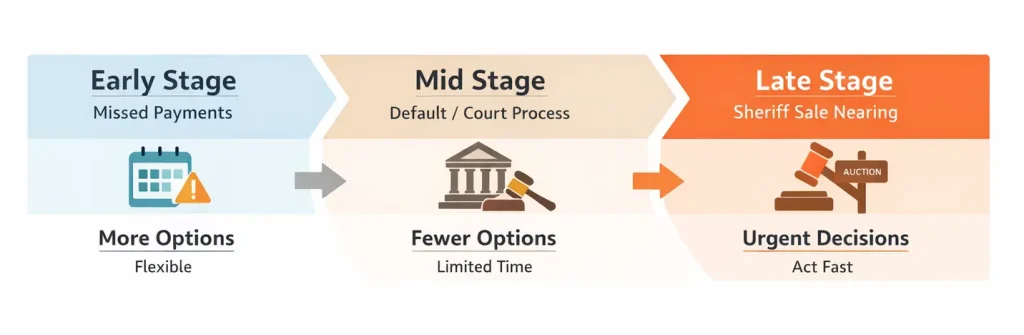
Your options depend on your stage:
2. Default / Demand Letter
A formal notice outlining what is owed and a deadline to catch up.
4. Court Proceedings
The case progresses through court.
6. Sheriff Sale Takes Place
The property is sold and ownership transfers.
What This Means
- options change by stage
- timing determines what’s realistic
The earlier you act in the process, the more options you have. The longer the process continues, the fewer options become available.
What Works in the Early Stage
(More Time, More Options)
Catch Up on Payments
Bring the loan current to stop foreclosure.
Works if the amount owed is manageable.
Repayment Plan
Spread missed payments over time.
Requires steady income.
Loan Modification
Adjust loan terms to reduce payments.
Requires documentation and time for approval.
Forbearance
Temporary pause or reduction in payments.
Used for short-term hardship.
Selling the Property
More time and flexibility to sell.
Can resolve the loan before foreclosure progresses.
What matters
- more options are available
- some take time to complete
Acting early keeps the most options open
What Still Works Mid-Process
(Less Options)
Catch Up on Payments
Still possible, but the total owed is higher.
Loan Modification
Still possible, but time-sensitive and not guaranteed.
Lender Negotiation
May allow structured solutions, but depends on timing.
Selling the Property
Becomes a practical option as timelines tighten.
What matters
- time is limited
- some options may take too long
Focus on what can be completed before deadlines.
What’s Left in the Late Stage
(Limited Time, Fewer Options)
Catch Up on Payments
Possible only if the full amount can be paid quickly.
Loan Modification
Still possible, but time-sensitive and not guaranteed.
Urgent Lender Negotiation
May be possible, but not guaranteed and time is tight.
Selling the Property Quickly
One of the most realistic options at this stage.
What matters
- time is critical
- slower options are no longer realistic
Only actions that can be completed quickly will work.
Working With Your Lender: When It Helps
(and When It Doesn’t)
When it helps
- stable income
- ability to afford payments
- enough time for approval
When it doesn’t
- late-stage foreclosure
- not enough time
- insufficient income
- incomplete documentation
What matters
Lender solutions take time and are not guaranteed.
You need to know if this is realistic for your timeline.
When Selling Becomes the Most Practical Option

Selling is often the most realistic option when:
Selling is often the most realistic option when:
- you can’t catch up on payments
- lender solutions won’t be approved in time
- time is limited
- keeping the property isn’t realistic
How selling stops foreclosure
The sale pays off the mortgage and stops the process.
What selling provides
- clear timeline
- control over outcome
- avoids auction
Selling is often the option that can still be completed when other options can’t.
What Happens If You Can’t Stop Foreclosure
If foreclosure continues:
The Process
- court action is completed
- sheriff sale occurs
- property is sold
The Outcome
- loss of property
- loss of control
- possible remaining balance
- credit impact
Why This Matters
If no decision is made, the outcome is determined by the process.

If You Want Help Understanding Your Options
If you’re unsure what applies to your situation, you can reach out.
We'll Help You
- review your situation
- identify your stage
- discuss available options
If Selling Is Being Considered, We'll Help With
- property review
- clear, no-obligation option
Just Remember
You don’t need to have it figured out; you just need to understand what’s possible next.
Let us help you understand your options
Have A No-Pressure Conversation Today
Get Your Free Offer TODAY!
Fill In This Form To Get Your No-Obligation All Cash Offer Started!